
Reporting
How to Make an Accessibility Audit Report Useful for Governance
How audit reports should structure evidence, severity, standards mapping, ownership, and remediation priority for leadership and compliance review.
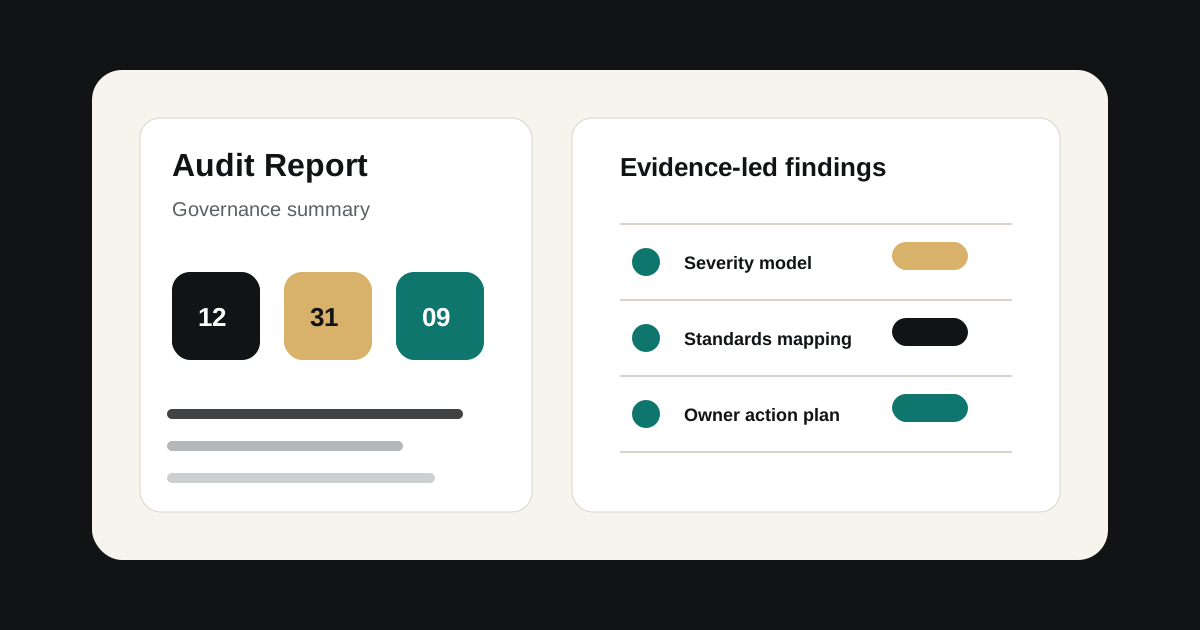
A governance-ready report has two audiences
Leadership and compliance teams need a clear view of risk, readiness, and priority. Delivery teams need specific evidence and implementation guidance. A useful report serves both without forcing one group to translate the other group's language.
The executive layer should summarize scope, standards, top risks, severity distribution, and remediation sequence. The implementation layer should show where the issue occurs, what failed, why it matters, and what good behavior looks like.
Evidence should be specific enough to act on
Screenshots alone are not enough. A strong finding explains the affected journey, test condition, user impact, related standard, and expected outcome. For complex interfaces, steps to reproduce are essential.
- Affected page, journey, component, or document.
- Keyboard, screen reader, or visual condition observed.
- Severity and user impact.
- WCAG or applicable standard reference.
- Expected behavior and remediation direction.
Severity should support decisions
Severity is not just a technical label. It should help teams decide what to fix first, which release a fix belongs in, and what residual risk remains if an issue is deferred.
For governance review, severity works best when it combines user impact, task criticality, legal or procurement exposure, and remediation urgency.
Retest status closes the loop
A report is stronger when it anticipates closure. Each major finding should be easy to retest, with clear expected behavior and an evidence trail. That allows remediation teams to prove what changed instead of only saying that work was completed.